
Complete Buyer’s Guide to Portable Induction Cooktops for Caravans
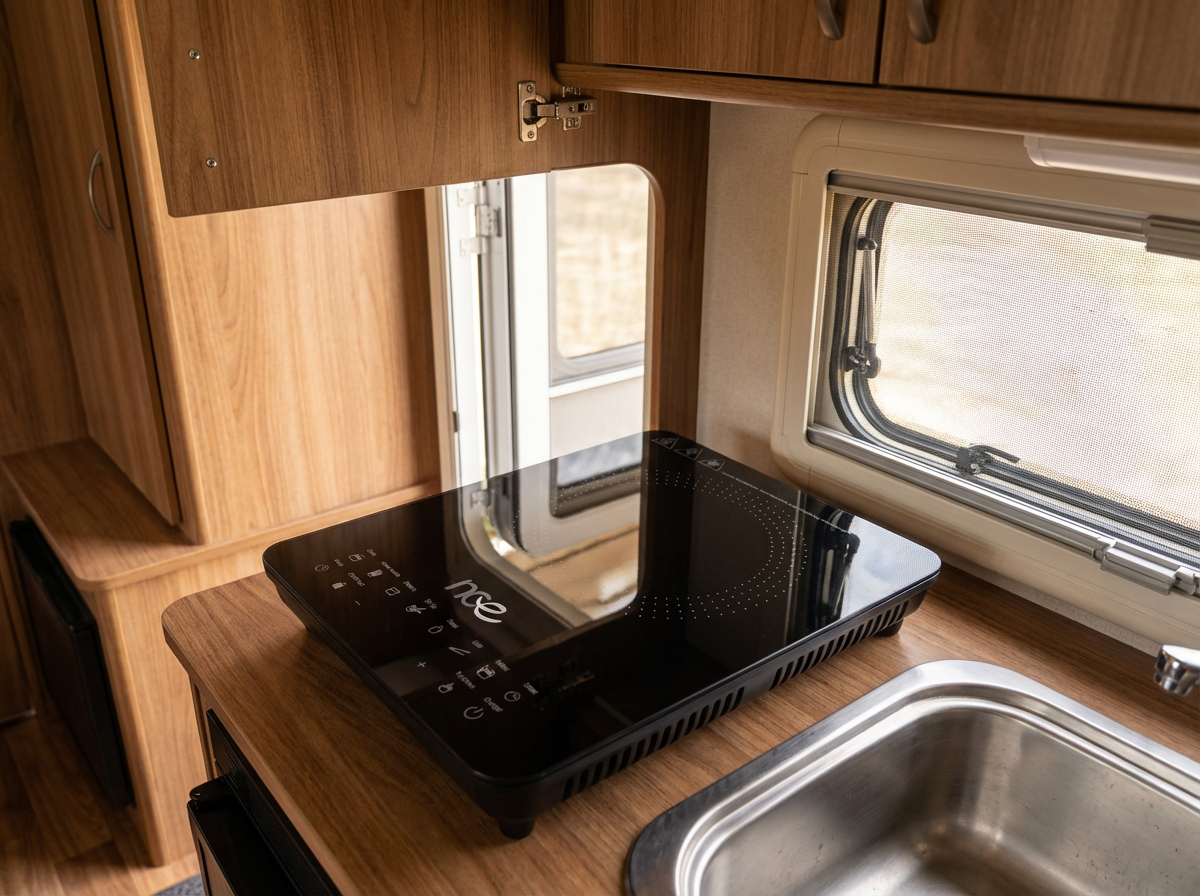
A portable induction cooktop is one of the simplest ways to modernise a caravan kitchen. It delivers fast, efficient heat with no open flame, creates less ambient heat inside the van and packs away neatly when the meal is done. This guide explains how induction works, what to look for, power and cookware considerations, and where the NCE Portable Induction Cooktop fits for Australian travellers.
Why caravanners are moving to induction
Less heat inside the van
Induction heats the base of the pan rather than the surrounding air. That means less heat build-up in a compact caravan kitchen and a more comfortable space when you are cooking on hot days.
Flameless and safer
No open flame, no gas leaks and cooler glass around the cooking zone make induction a safer option for families, pets and tight layouts where people move past the bench regularly.
Fast, precise cooking
Power levels change in seconds. Boiling water, dropping to a gentle simmer or searing a steak is simple and repeatable, which is handy when you are cooking after a long day on the road.
Portable flexibility
A portable induction cooktop can live inside during cold or wet weather, then move outside under the awning on good days. When you are travelling, it stores flat and does not take up permanent bench space.
How induction cooking works
An induction cooktop uses an electromagnetic field under the glass surface. When you place compatible cookware on top, that field induces heat directly in the base of the pot or pan. The glass does warm up from contact with the cookware but is not the primary heat source.
Why this matters in a caravan
- Less wasted heat makes the van more comfortable.
- Energy is used more efficiently, which helps when running on battery and inverter power.
- There is no flame to blow out or interact with breezes around open doors and windows.
Induction vs gas cooktops (at a glance)
Power requirements in a caravan
The NCE Portable Induction Cooktop uses up to 2000W on higher settings. Before relying on induction as your main cooker, check:
- Your inverter rating, ideally 2000–3000W pure sine wave.
- Battery capacity and whether you are using AGM or lithium.
- How many other high-draw appliances may run at the same time.
On powered sites, a portable induction cooktop is simple. Off-grid, many caravanners use lower power modes for simmering and reserve the highest settings for short bursts such as boiling water.
Cookware compatibility
Induction cooktops need magnetic cookware. A quick check is to place a fridge magnet on the base. If it sticks firmly, the pot or pan is suitable.
Good options
- Magnetic stainless steel pots and pans.
- Cast iron cookware, including camp ovens with flat bases.
- Induction-ready non-stick pans labelled as compatible.
Likely to fail the magnet test
- Plain aluminium without an induction base.
- Copper cookware.
- Glass or ceramic dishes.
Deep dive: NCE Portable Induction Cooktop
Key features
- 2000W power output for rapid heating.
- Crystal-glass surface with bright LED display.
- Touch controls with child lock for peace of mind.
- 7 cooking modes to match different meal types.
- Timer function up to 3 hours.
- Compact 280x350x65mm footprint.
- Lightweight and easy to store in caravan cabinetry.
Why it suits caravans and RVs
The NCE Portable Induction Cooktop is built for travellers who want efficient indoor cooking without installing a full built-in cooktop. It is compact enough for smaller vans, yet powerful enough to handle family meals on powered sites or capable off-grid setups.
Cooking modes explained
With seven modes available, you can match the cooktop power to what you are cooking instead of running everything at full output.
Low and simmer settings
Ideal for soups, slow-cooked dishes and keeping food warm without boiling it dry.
Medium frying settings
Useful for pan-frying meats, vegetables and one-pan meals where you want consistent heat and even browning.
High and boost settings
Best for boiling water, searing or quick stir-fries. These settings draw the most power, so are often used in shorter bursts when running from an inverter.
Timer function
The built-in timer lets you set cooking time up to 3 hours. When the time finishes, the cooktop will switch off, which is handy if you tend to walk away while cooking.
NCE vs common caravan cooktop setups
Pros and cons of a portable induction cooktop
Pros
- Fast, efficient heating with precise control.
- No open flame in the caravan.
- Less heat build-up in small kitchens.
- Compact footprint and easy storage.
- Works well on powered sites and capable inverter systems.
Cons
- Requires suitable magnetic cookware.
- Draws significant power at high settings.
- Single cooking zone, so you still may use a BBQ or gas for multiple dishes.
For many travellers, a portable induction cooktop and a quality BBQ or gas burner outside cover almost every cooking situation without overcomplicating the caravan kitchen.
FAQs
Can a portable induction cooktop replace my gas cooktop?
It can for many travellers, especially if you mainly cook indoors on powered sites. If you rely heavily on gas for off-grid cooking or prefer flame for certain dishes, you may still keep a gas burner as a backup.
Will induction drain my batteries quickly?
At full power it draws a decent load, but it is more efficient than many other electric appliances. Using lower settings for simmering and reserving high power for short bursts helps manage consumption.
Is it safe to use induction inside a caravan?
Yes. There is no combustion or flame, and the glass stays cooler than traditional electric hotplates. You should still follow normal safety practices and allow ventilation when cooking.
Do I need special pans for induction?
You need magnetic bases. Many stainless steel and cast iron pans already work. If a magnet sticks well to the base, the pan is suitable.
Can I store the NCE Portable Induction Cooktop vertically?
Yes, as long as the cable is not under strain and the glass surface is protected from knocks, it can be stored vertically or horizontally in a cupboard.