
Best Lithium Battery for Caravans in Australia: Why the DCX Power System Sets the Benchmark
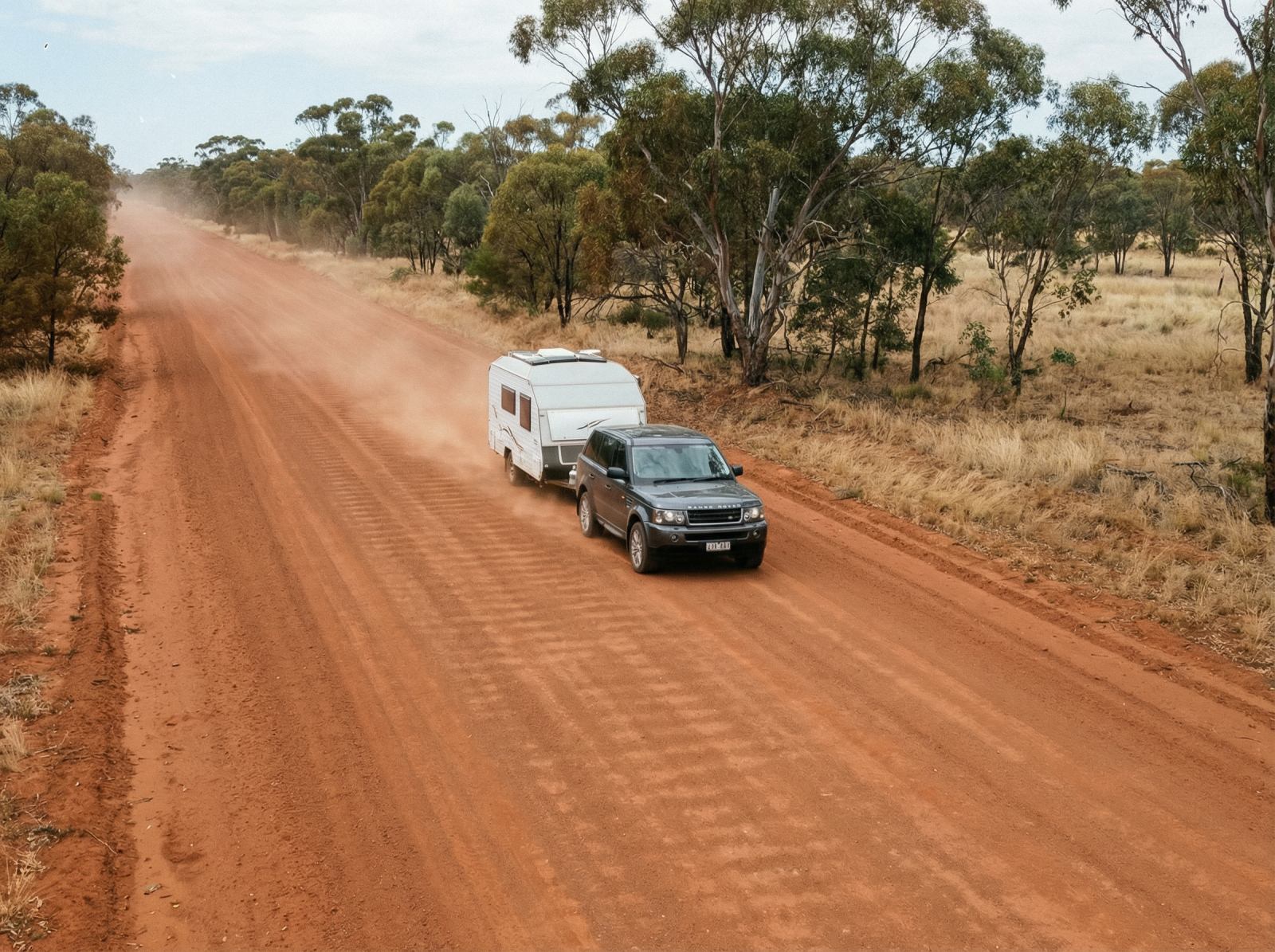
What is the best lithium battery for caravans? It is no longer just about amp hours. Modern caravans are running 240V air conditioners, induction cooktops, microwaves, coffee machines and large inverters. The battery is now the foundation of the entire power platform, which means safety certification, architecture and charging integration matter as much as capacity.
The DCX Power System is developed in Australia, backed by national installation and after-sales support. This guide breaks down the DCX 12V Lithium Battery, the DCX 48V Lithium Battery, and the supporting components that turn battery capacity into a complete off-grid solution, including the DCX Inverter and the 850W DC-DC Vehicle Charger.
View DCX 12V Lithium Battery (942Ah) View DCX 48V Lithium Battery (14.3kWh)
Why caravan power systems need a different battery approach
Caravan power demand has changed
Old-school touring setups were designed around lights, pumps and a 12V fridge. Today, caravan owners want home-style convenience on the road. That means bigger inverters, more solar, and batteries that can safely deliver sustained power without overheating or voltage instability.
Once you introduce 240V appliances, you are no longer choosing a “battery”, you are choosing a complete energy platform.
Architecture matters more than raw capacity
A cheap lithium battery with a big number on the label can still be a poor choice if it relies on messy parallel wiring, lacks proven safety certification, or cannot integrate cleanly with solar, inverter and vehicle charging inputs.
That is where a system approach, like DCX, separates itself from typical drop-in batteries.
What makes the best lithium battery for caravans
The best lithium battery for caravans needs to perform in a harsh environment. Australian caravans deal with vibration, heat, dust, water exposure, and the reality that many systems are mounted in tight spaces with limited ventilation. A high-end battery platform should therefore be evaluated across safety, durability, installation integrity and real-world usability, not just amp hours.
At a practical level, the key pillars are:
- Safety certification, verified testing standards rather than marketing claims
- Cycle life, particularly at deep discharge
- System architecture, less complexity, fewer failure points
- Environmental protection, sealed enclosures where it matters
- Charging integration, solar, mains, generator and vehicle charging
- Support, warranty coverage and local technical support
Deep dive: DCX 12V Lithium Battery (628Ah and 942Ah)
The DCX 12V Lithium Battery is designed for travellers who want high capacity 12V power without building a complicated battery bank. It is available in 12.8V 628Ah and 12.8V 942Ah configurations, making it suitable for both high-end touring and serious off-grid capability.
The key technical point is that DCX is engineered as a platform, not a collection of smaller batteries wired together. For many caravans, the moment you start stacking multiple lithium batteries in parallel under seats or beds, you introduce more cabling, more connections, and more potential points of failure. DCX reduces that complexity by consolidating capacity into a structured system.
DCX also publishes a cycle life rating of greater than 8000 cycles at 100% depth of discharge. That figure matters because deep discharge performance is where many batteries separate themselves over time. If you actually tour off-grid and use your storage daily, cycle life quickly becomes the true cost driver, not upfront purchase price.
The DCX 12V platform is compatible with major inverter and charging ecosystems, including Victron, Redarc, Enerdrive, Projecta and BMPRO, which gives installers flexibility when integrating it into existing caravan electrical systems.
Shop DCX 12V Lithium Battery (942Ah)
Deep dive: DCX 48V Lithium Battery (7.1kWh and 14.3kWh)
The DCX 48V Lithium Battery platform is designed for the modern, high-demand caravan where the goal is genuine electrical independence. This is where 48V architecture becomes a major advantage, because it reduces current draw for the same power output, which improves efficiency and lowers heat load across wiring and connections.
DCX offers a hybrid configuration (7.1kWh) and a full off-grid configuration (14.3kWh). The full off-grid option is built for fully electric caravans, including induction cooking and extended air conditioning use, depending on runtime and charging input.
In the DCX system spec, the 48V platform is built around a 5000W pure sine wave inverter and a 5000W MPPT solar capability, which is where the architecture becomes important. The system is not just storage, it is power delivery, solar management and safety systems working together.
Shop DCX 48V Lithium Battery (14.3kWh)
DCX Inverter: why pure sine wave matters
The inverter is one of the most underrated parts of a caravan battery system. It is the component responsible for converting battery energy into usable 240V power, which means it directly influences appliance reliability and performance.
The DCX Inverter is a pure sine wave inverter designed for high-load caravan use. Pure sine wave output matters because many appliances, particularly air conditioners, induction cooktops, microwaves and sensitive electronics, can behave unpredictably or run hotter on modified sine wave power. In long-term touring conditions, that can reduce appliance lifespan and increase fault frequency.
Where this becomes important in a high-end caravan is simultaneous load. A system may run an air conditioner while also running a microwave, battery charger, lighting and refrigeration. A properly designed inverter platform supports this without voltage instability, nuisance shutoffs or poor appliance performance.
850W DC-DC Vehicle Charger: charging while you drive
Solar is a powerful input source, but it is not always reliable. Weather, shade, seasonal sun angles and roof space limitations all impact real-world solar yield. That is why vehicle charging remains one of the most important upgrades for touring caravanners.
The 850W DC-DC Vehicle Charger is designed to convert tow vehicle alternator output into lithium-compatible charging. Instead of “whatever voltage the alternator happens to deliver”, a DC-DC charger provides controlled charging behaviour, which supports battery health and predictable replenishment.
Practically, this means that travel days become recharge days. If you move camps every couple of days, DC-DC charging can be the difference between arriving at your next stop with plenty of stored energy versus arriving already behind.
View 850W DC-DC Vehicle Charger
Battery Cycle Life Context
Cycle life is one of the most useful specifications for comparing lithium platforms, but it must be interpreted correctly. Brands publish cycle life at different depth of discharge values, so comparisons are never perfect. The table below provides a reference point using published figures where available.
| Brand | Published Cycles | Depth of Discharge | What it means in practice |
|---|---|---|---|
| DCX 12V Lithium Battery | >8000 cycles | 100%DoD | Designed for deep discharge use in touring and off-grid conditions |
| Victron Lithium Smart | 2500 cycles | 80%DoD | Premium system ecosystem, cycle life depends on operating profile |
| Enerdrive eLITE | ≥2000 cycles | 80%DoD | Common touring lithium option, usually installed as modular banks |
| REDARC Lithium | 2000 cycles | 80%DoD | Popular in touring builds, often paired with REDARC management |
Real-world runtime examples
The following runtime examples are approximate and assume a fully charged DCX 48V Lithium Battery system at 14.3kWh, with no charging input during usage. Real-world results depend on duty cycles, ambient conditions and appliance efficiency.
| Appliance | Typical Load | Approx Runtime (14.3kWh) | Notes |
|---|---|---|---|
| Rooftop air conditioner | 1200–1500W | 8–10 hours | Highly dependent on weather and thermostat cycling |
| Induction cooking | 1800W | 6–7 hours continuous | Most caravans use induction in short bursts, not continuously |
| 12V compressor fridge | 60–80W average | Multiple days | Average load varies by ambient temp and door openings |
Safety, UL1973 certification and IP67 protection
Safety is a non-negotiable when installing high-capacity lithium systems in confined caravan environments. DCX publishes UL1973 certification, integrated fire suppression, an electrical alarm system and IP67 ingress protection.
UL1973 is a recognised battery safety standard covering electrical, mechanical and thermal testing. IP67 indicates a high level of protection against dust ingress and water exposure, which is particularly relevant for chassis mounted installations and harsh touring conditions.
Which DCX system suits which traveller?
DCX 12V Lithium Battery suits travellers who want a high-capacity touring system, run typical inverter loads, and want a premium 12V platform without the complexity of multi-battery parallel setups.
DCX 48V Lithium Battery suits travellers building a fully electric caravan, running induction cooking, and wanting the capacity and efficiency required for extended off-grid air conditioning.
Both platforms become significantly more practical when paired with the right supporting hardware. For high load caravans, the DCX Inverter and the 850W DC-DC Vehicle Charger complete the system by turning stored energy into usable power, and replenishing it reliably during travel.
View DCX 48V 14.3kWh System View DCX 12V 942Ah Battery
FAQs
Is 48V better than 12V for caravans?
For high-demand electric caravans running air conditioning and induction cooking, 48V systems offer improved efficiency and scalability because they reduce current draw for the same power output. For moderate touring setups, a high-capacity 12V platform can still be a strong sol